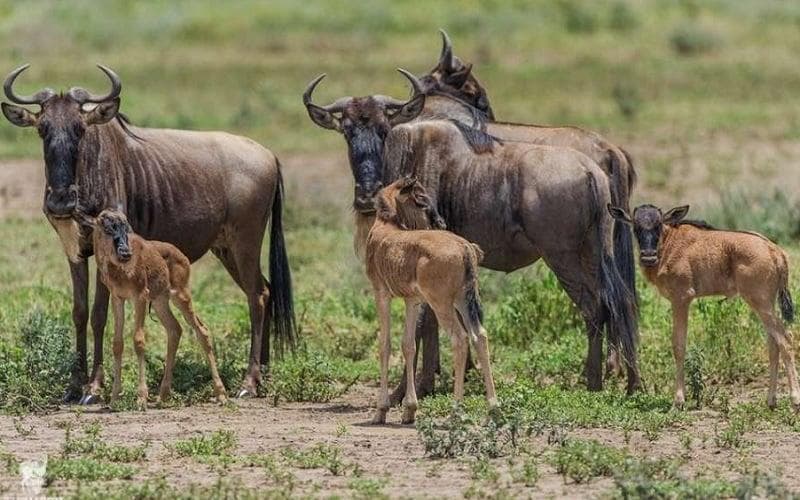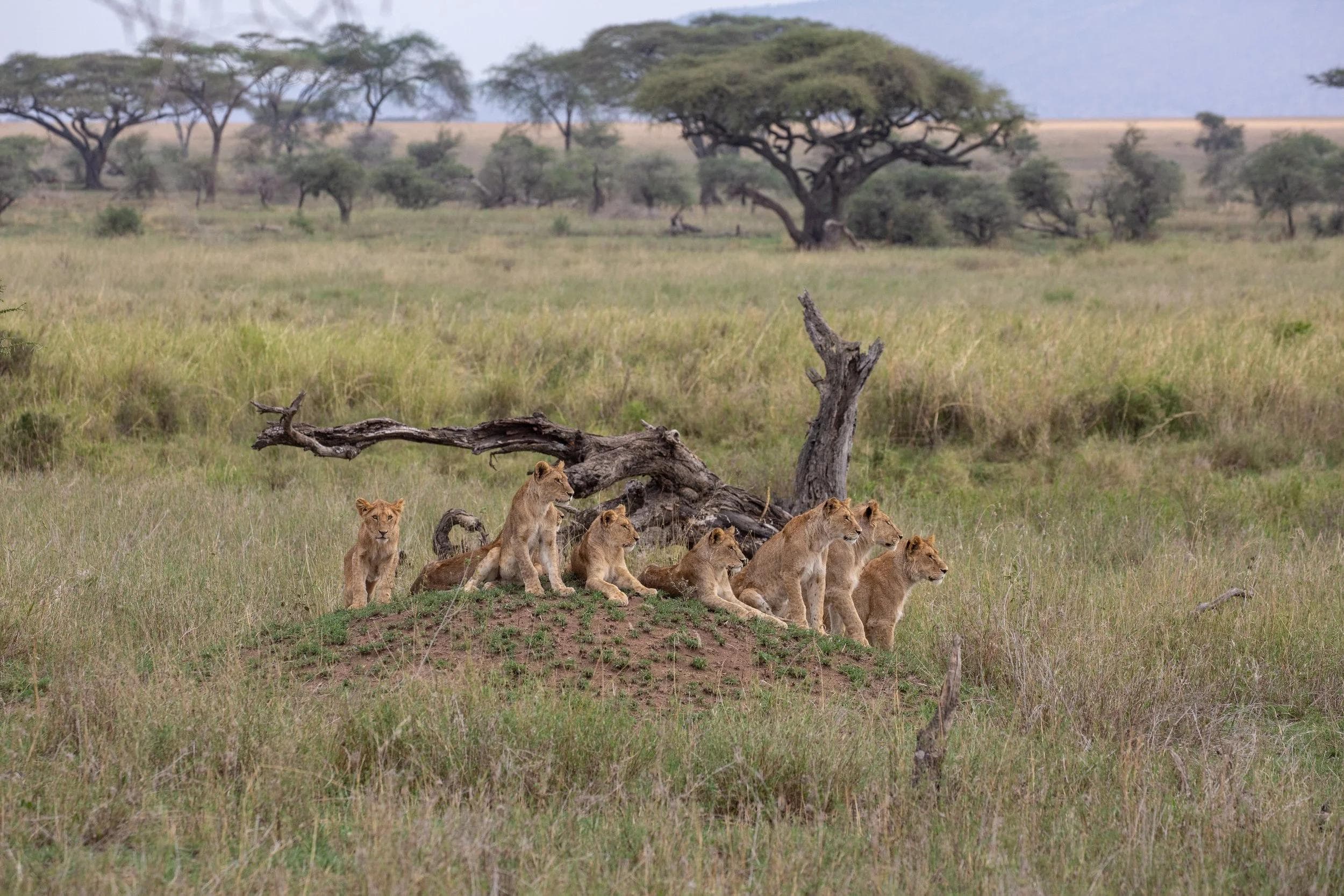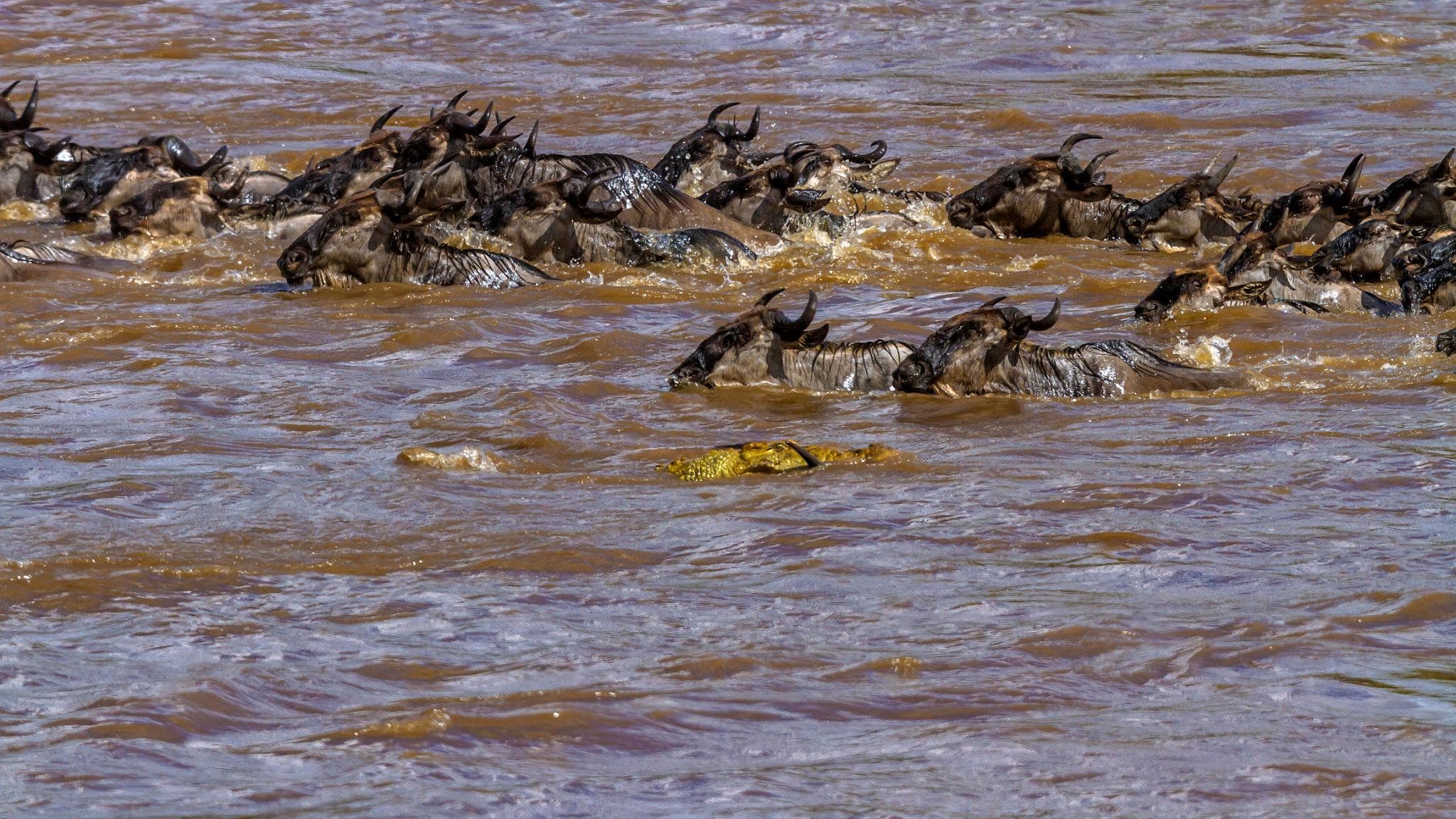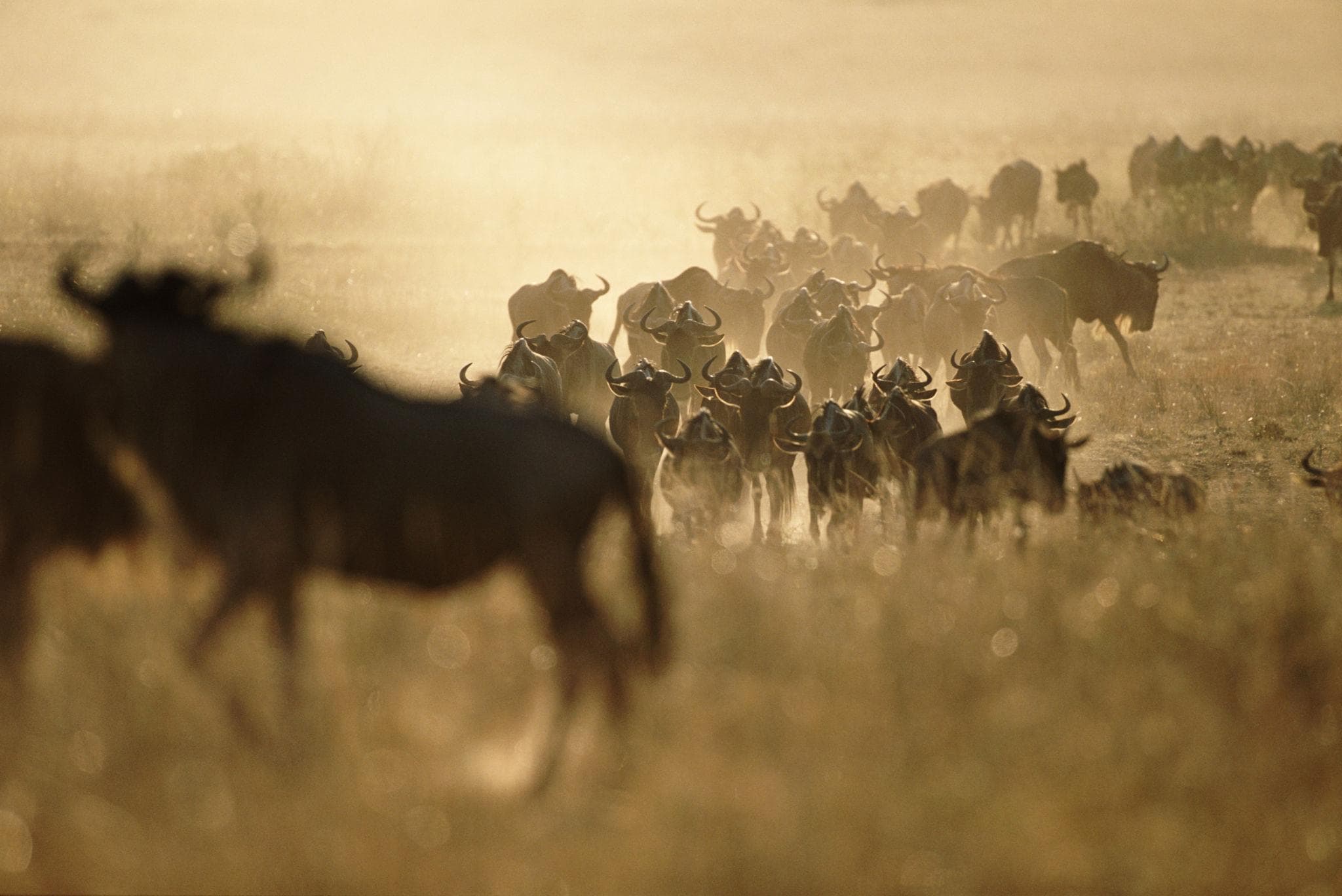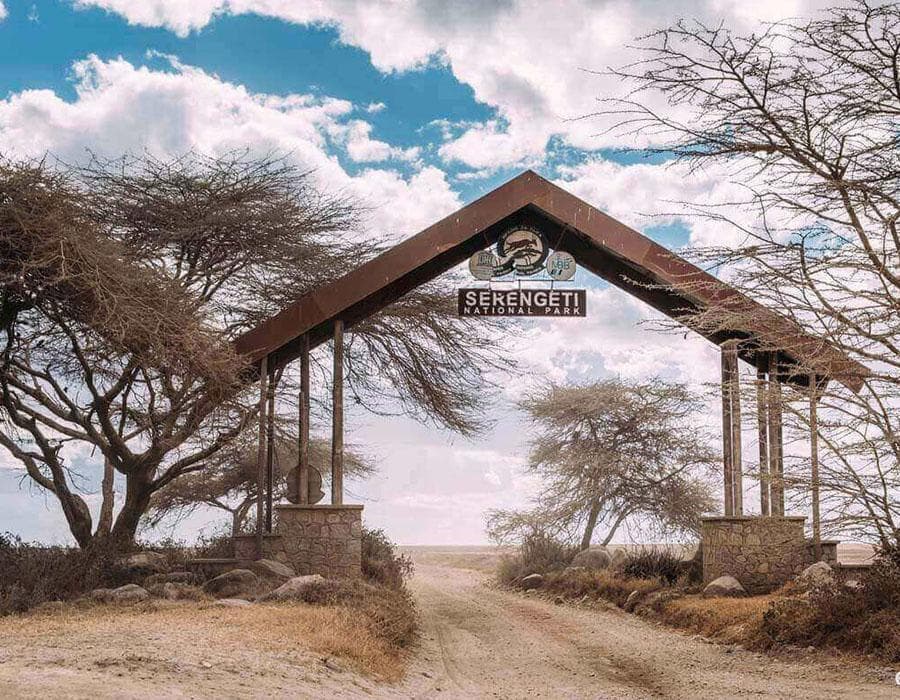
The Serengeti National Park encompasses 14,763 km² of pristine East African savanna and is the oldest and most celebrated wildlife reserve in Tanzania. It forms the core of the Serengeti-Mara ecosystem — shared with Kenya's Maasai Mara — and together they host the Great Wildebeest Migration: the annual circular journey of 1.5 million wildebeest, 200,000 zebra, and 500,000 gazelle in an endless search for fresh grazing. The Serengeti's landscapes are staggeringly varied: the endless grass plains of the south where wildebeest calve in February, the kopje-dotted Seronera valley teeming with resident wildlife, the woodlands of the west where river crossings occur, and the remote golden hills of the north. The park's predator density is unrivalled anywhere on Earth — lion prides, cheetah families, leopards draped in acacia trees, hyena clans, and wild dog packs are all present. A Serengeti safari is one of the defining experiences of any African journey.
Highlights
Wildlife You May Encounter
Climate & Weather
Semi-arid savanna. Warm year-round (20–30°C). Dry season Jun–Oct is peak (migration in north). Wet season Nov–May brings the southern migration and calving. Short dry season Jan–Feb ideal for calving plains.